email: info(at)go-eu.com
phone: +49 (0)89 90 42 23 60




assisted in a company setup.


The CEO from GO EU
Table of contents:
- Introduction
- Assuming you can’t register as a foreigner
- Choosing the wrong legal form
- Skipping a valid registered address
- Ignoring naming rules (Cyrillic)
- Believing you’ll never need notarization
- Underestimating bank account opening
- Handling share capital incorrectly
- Ignoring translation requirements
- Misunderstanding tax registration
- Registering VAT without a strategy
- Overlooking licenses & permits
- Forgetting annual reporting & compliance
- Doing everything alone without local help
- Underestimating language barriers
- Ignoring ongoing costs & practical realities
- Conclusion
How Not to Start a Business in Bulgaria as a Foreigner. The Most Common Mistakes and How to Avoid Them
09 May 2026 5732 4Introduction
This guide reveals the most common mistakes foreign entrepreneurs make when launching a company in Bulgaria and how to avoid them. From failing to understand legal requirements to mishandling bank account openings, from neglecting registered addresses to ignoring tax obligations, we explain each pitfall clearly and offer practical advice to help you bypass them.
1. Mistake: Assuming You Can’t Register a Company as a Foreigner
One of the biggest misunderstandings is the belief that foreigners cannot open a business in Bulgaria unless they are residents, EU citizens, or have a local partner.
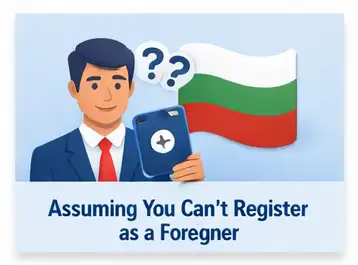
Reality: Bulgaria places no citizenship restrictions on company ownership. A foreigner, whether from the EU or outside the EU, can form and own 100% of a Bulgarian company. There are typically no residency requirements for shareholders in the registration process.
Why people get this wrong: Many assume that company ownership abroad requires residence permits or years of local presence. While those topics matter for immigration, they are usually separate from company formation. Latest Taxes in Bulgaria and Why to move to Bulgaria You can find the links.
- Confirm that non-residents can own and manage companies in Bulgaria.
- Choose a structure (LLC, branch, representative office) based on your real needs.

Tel.: +49 (0)89 90 42 23 60
Receive more Infos ➔ Free initial consultation
2. Mistake: Starting Without Knowing the Legal Forms
Another frequent error is jumping into the process without understanding which legal structures are suitable for foreigners.

In Bulgaria, the most common company types are:
- EOOD – Single-member limited liability company (one founder)
- OOD – Limited liability company (multiple founders)
- AD / EAD – Joint-stock company (more complicated administration)
- Branch / Representative office – Extensions of a foreign entity (not separate legal persons)
Mistake: Many foreign founders pick too complicated forms (like joint-stock) when an EOOD/OOD is enough for most startups.
- Use EOOD/OOD for most small and medium businesses.
- Pick AD/EAD only if your plan truly needs it (e.g., large investors, share issuance).
3. Mistake: Not Securing a Valid Registered Address
Every Bulgarian company must have a registered office address in Bulgaria to receive official correspondence and legal notices.
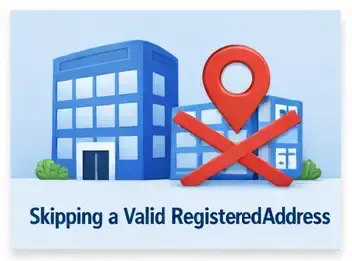
Mistake: Many foreigners try to register without an address, hoping it’s optional or can be added later.
Why this is a problem: Without a valid address, your registration can be rejected. A foreign address is not acceptable as the Bulgarian registered seat.
- Use a legitimate local address: rented premises, coworking, or a virtual office service.
- Ensure you have the right paperwork proving your right to use the address.
4. Mistake: Ignoring Company Name Rules, Especially Cyrillic
In Bulgaria, company names are registered in Cyrillic, although a Latin equivalent can often be used in branding.
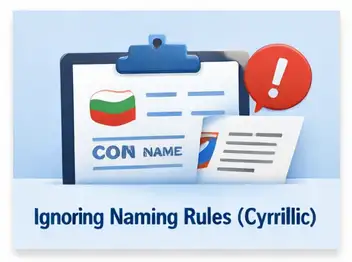
Mistake: Picking a name only in Latin and skipping name availability checks.
- Check name availability early.
- Prepare at least 2–3 backup names.
- Think about how your name looks and sounds in Cyrillic.
5. Mistake: Assuming You Can Do Everything Remotely With No Notarization
Remote incorporation is possible in many cases, but there are still legal steps that may require notarization, apostille, or properly authenticated signatures. Find our company formation Bulgaria detailed report here.

Mistake: Believing you won’t need a notary or formal document legalization at any point.
- Plan for notarization of signatures where required.
- If signing abroad, prepare for apostille/legalization and certified translation.
- Use a professional service familiar with remote setups to avoid repeated rejections.
6. Mistake: Underestimating Bank Account Opening Challenges
You usually need a bank account to deposit share capital and to run daily operations. Many foreigners assume this is automatic, but banks must comply with strict AML checks.

Mistake: Expecting a quick approval without preparation.
- Prepare: ID documents, proof of address, business description, and source-of-funds evidence.
- Choose banks experienced with foreign clients.
- Be ready for a director’s in-person visit if the bank requires it.
7. Mistake: Forgetting to Deposit the Initial Share Capital Correctly
For EOOD/OOD, the minimum share capital is low (often symbolic), but it still must be deposited into the correct account type, and you typically need a bank certificate for the registration file.

Mistake: Skipping this step or using the wrong account.
- Open the correct capital contribution account.
- Deposit the share capital before filing registration documents.
- Request the bank’s share capital deposit certificate.
8. Mistake: Ignoring Translation and Local Language Requirements
Bulgarian officials generally expect official documentation in Bulgarian. Foreign documents may require certified translation and, depending on the origin, legalization/apostille.

Mistake: Submitting documents only in English.
- Use certified translators for official paperwork.
- Check if a notarized translation is needed for your particular documents.
You don't want to travel to Bulgaria 3 times or stay for weeks? 100% remote business setup! Receive your digital notary appointments as an included service!

Only while stocks last: Limited to 80 digital notary appointments*
Submit your application now*Digital notary appointments are normally 3-4 times more expensive than in-person appointments, as they contain interpreters, apostille and shipping. Now included for a limited time!
9. Mistake: Not Knowing Tax Registration Requirements
Commercial Register approval is only the beginning. Your company has ongoing obligations such as accounting, tax filings, and (if applicable) payroll-related registrations.
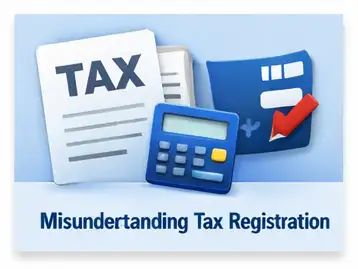
Mistake: Thinking “company registration = fully done.”
- Work with an accountant from day one.
- Understand your corporate tax and reporting duties.
- Register properly if you hire staff or pay management remuneration.
10. Mistake: Assuming VAT Registration Is Mandatory for Every Business
VAT can be mandatory once you pass a turnover threshold, but voluntary VAT registration may or may not make sense depending on your model (EU clients, B2B services, imports, etc.).
Mistake: Registering for VAT too early without a plan.
- Check whether VAT is required for your turnover and activity.
- Consider whether VAT helps or adds compliance burden in your situation.
- Consult a Bulgarian tax specialist before deciding.
11. Mistake: Overlooking Licenses, Permits, or Regulatory Requirements
Some industries require licenses or permits beyond company incorporation (e.g., finance, tourism, food, health, transportation).

Mistake: Starting operations without checking sector rules.
- Identify your business activity code and verify licensing requirements.
- Confirm local permits (municipal, sanitary, fire safety) if you operate physical premises.
12. Mistake: Neglecting Annual Financial Reporting & Compliance
Bulgarian companies generally need bookkeeping and annual filings. Even if your company is “inactive”, you may still have reporting requirements.

Mistake: Forgetting compliance after the company is registered.
- Set calendar reminders for annual reporting deadlines.
- Hire a reliable accountant who handles filings and compliance.
- Keep clean records from the start to avoid problems later.
13. Mistake: Trying to Do Everything Yourself Without Local Support
Bulgaria can be efficient, but small errors in files or procedure often lead to rejections and delays.
Mistake: Assuming you can “figure it out later” after submitting.
- Use local professionals (lawyer/accountant/company formation specialist).
- Ask for review before filing, not after rejection.
You don't want to travel to Bulgaria 3 times or stay for weeks? 100% remote business setup! Receive your digital notary appointments as an included service!
Only while stocks last: Limited to 80 digital notary appointments*
Submit your application now*Digital notary appointments are normally 3-4 times more expensive than in-person appointments, as they contain interpreters, apostille and shipping. Now included for a limited time!
14. Mistake: Underestimating Language and Cultural Barriers
Bulgaria uses Cyrillic, and many official interactions are handled in Bulgarian. Relying only on basic English can cause misunderstandings, missed notices, and delays.
Mistake: Navigating bureaucracy without translation support.
- Work with bilingual professionals where possible.
- Use certified translation for official paperwork and correspondence.
15. Mistake: Not Factoring in Ongoing Costs and Practical Realities
Incorporation can be affordable, but it still requires spending such as translations, notary fees, a registered address service, accounting, and banking.

Mistake: Treating Bulgaria as a “no-cost” startup jurisdiction.
- Budget for setup costs and monthly accounting/compliance support.
- Plan for bank fees and possible further paperwork for AML checks.
- Include registered office costs if you don’t rent a physical location.
Conclusion: Start Smart, Not Hard
Starting a business in Bulgaria as a foreigner is possible and often advantageous, but it’s not automatic. Most problems come from assumptions: assuming you can skip an address, assuming you can avoid notarization, assuming banks won’t ask questions, assuming “registration means done”.
If you approach the process strategically, prepare your documentation, and get local support early, you can avoid the pitfalls that slow down so many foreign founders.
Tel.: +49 (0)89 90 42 23 60
Receive more Infos➔ Free initial consultation
Hector
Published on 20 December, 2025 / Answer
I made at least three of these mistakes when I first looked into opening a company in Bulgaria, especially underestimating the bank account opening and VAT topics. I wish I had read something like this earlier; it would have saved me weeks of back-and-forth. Very clear and practical guide.
Sofia R.
Published on 20 December, 2025 / Answer
As someone who helps foreign clients set up companies in Bulgaria, I can validate that these are exactly the mistakes we see every week. The points about registered address, bank compliance, and annual reporting are especially important.
Ivan.
Published on 21 December, 2025 / Answer
I’m currently planning to start a business in Bulgaria, and this article helped me understand where I need professional help and where I can prepare things myself.
Thomas Hofmann
Published on 21 December, 2025 / Answer
Setting up a company within the EU is a normal process, and we can do it 100% remotely. Please feel free to contact us by phone or via the contact form.
Leave a comment